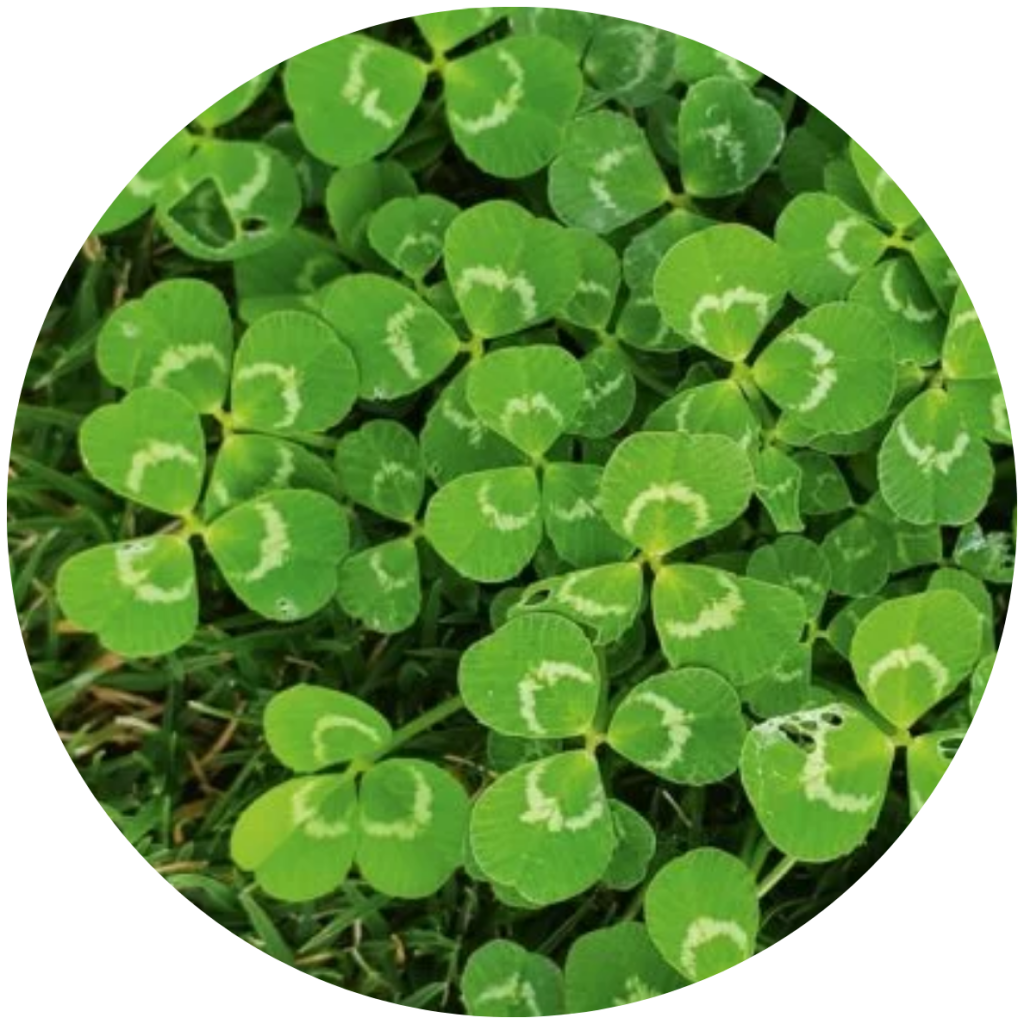
Clover commonly appears in lawns that are under stress, thin in coverage or lower in nitrogen. It has small oval leaves marked with a faint pale band and produces soft, rounded flowers that range from white through to pink or yellow. Clover spreads quickly once established and competes heavily with turf for space and moisture.
Improving lawn density is the first step in reducing it, supported by selective broadleaf herbicides designed for turf grasses. Thick, healthy turf will out-compete clover and keep it from returning.

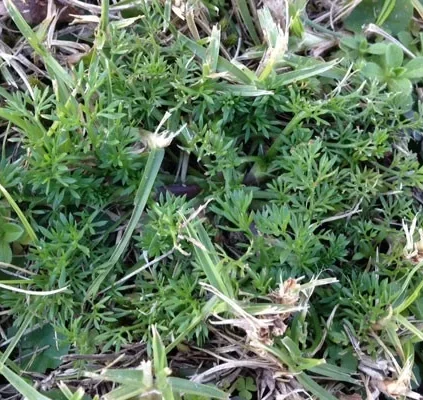
Bindii forms a low rosette-style leaf pattern through cooler months and hardens off as warmer weather arrives. When fully matured, the plant produces sharp, dry burrs that are painful underfoot. It thrives in compacted or neglected turf and spreads most aggressively through winter and early spring.
Selective broadleaf herbicides are the typical control method, along with maintaining turf density and soil health. Treat before burrs form to prevent seed spread.
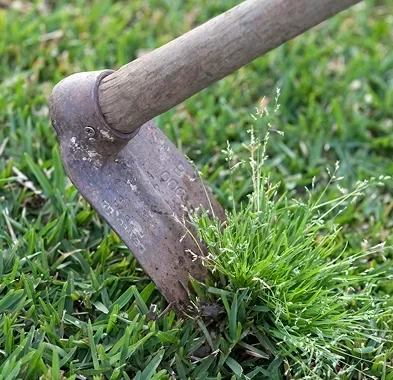
Winter Grass is a fine-leaf, low-growing annual that settles into weak patches of lawn during the cooler months. It forms soft tufts with pale green leaves and triangular seed heads. Once it sets seed, the weed quickly spreads through open turf and can be difficult to suppress.
Pre-emergent herbicides are the most effective prevention method, applied before germination. Selective post-emergent controls can also be used early in growth before seed heads form.
Creeping Oxalis travels along the soil surface and roots from its stems as it spreads. Leaves are clover-like and small, and tiny seed pods can eject seeds over short distances. Once established, it can sneak between turf leaves and escape mower height.
Small patches can be hand-removed with patience, but larger spread typically needs selective herbicide treatment. Keeping lawn thick and well fed reduces the ability of Oxalis to return.
Soursob has deep yellow flowers, clover-like foliage and a long white bulb that stores energy. Pulling the foliage alone won’t resolve the issue, since the bulb will regrow. It’s slow to remove completely, and control usually requires repeated mowing and weakening of the bulb before deeper extraction.
Some homeowners choose targeted non-selective herbicides, carefully applied to avoid affecting surrounding lawn.
Cudweed forms a rosette of soft green leaves with a silvery underside. It often appears through spring and autumn and prefers thin turf or underfed lawns.
Selective broadleaf herbicides are the primary control method, but good lawn nutrition and density are just as important to prevent re-establishment.
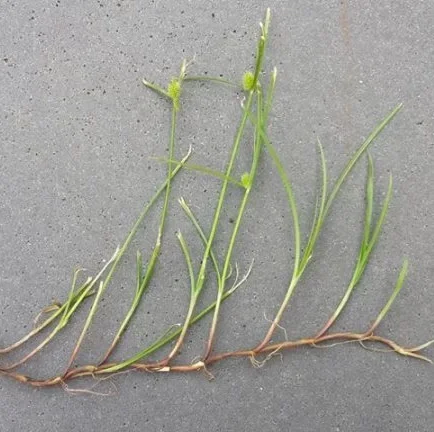
Nutgrass is a sedge with bright, narrow green blades and a distinct triangular stem. Underground, it forms nut-like bulbs that allow it to re-emerge even after hand removal. The leaf height often stands above the turf canopy, making it easy to spot.
Selective sedge herbicides are the recommended control method. Hand removal alone is not usually effective due to the bulbs left behind.
Crowsfoot forms flat, pale green tufts with strap-like blades and multi-fingered seed stems in warmer months. It spreads aggressively if seed is allowed to set, especially in poorer lawns with open surface gaps.
Small tufts can be removed manually. Larger infestations are typically treated with selective herbicides designed for grassy weeds. Pre-emergent herbicides are strongly recommended to reduce recurrence.
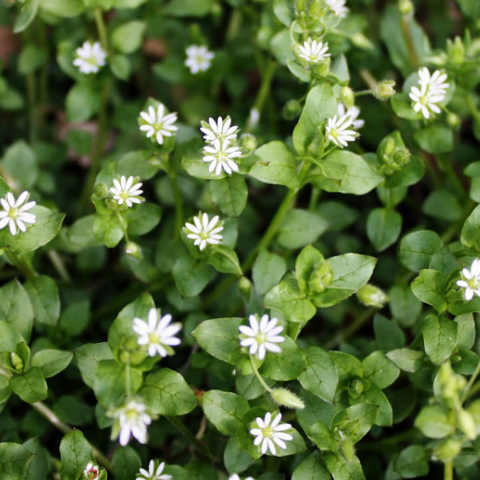
Chickweed forms low, mat-like growth through winter, with small paired leaves and soft white flowers. It creeps into weak patches and can take hold quickly if lawns aren’t maintained.
Small infestations can be pulled by hand, while broader spread is best controlled with selective broadleaf herbicides.
Onion Weed forms thin strappy leaves and small white bulbs, releasing an onion scent when crushed. Tiny bulblets make it persistent and difficult to remove once established.
Bulbs must be fully removed to prevent regrowth. Where digging isn’t practical, selective herbicides formulated for onion-type weeds can be used.
Summer Grass has hairy leaves and purple-tinged stems near the base. It spreads fast through seed once warm weather arrives.
Hand removal works if detected early. For heavier spread, selective herbicides for grassy weeds and pre-emergent treatments in early spring can prevent regermination next year.
This sedge forms dark, glossy leaves and spreads via underground rhizomes. Once settled, it can move rapidly through turf.
Small outbreaks can be dug out carefully, ensuring all roots are removed. When spread becomes too wide, selective sedge herbicides are the most reliable option.
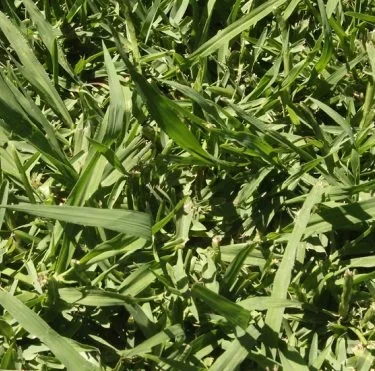
Paspalum has broad leaves with a slight purple tinge near the base and is common in warm months. If left to seed, it spreads quickly.
Manual removal may work in isolated cases, but selective herbicides for grassy weeds are the usual treatment when infestations spread.
Spurge grows flat to the ground with reddish stems and dark green leaves that often have coloured markings. Milky sap appears when broken.
It is easiest to hand-remove when spotted early. Persistent patches can be treated with selective broadleaf herbicides.
Khaki Weed forms flat, hairy oval leaves and reddish stems, producing greenish-yellow flowers. Sharp burrs can cling to animals, clothing and equipment, making spread easy.
Careful manual removal or targeted herbicide treatment is recommended. Avoid disturbing the burrs to reduce seed spread.
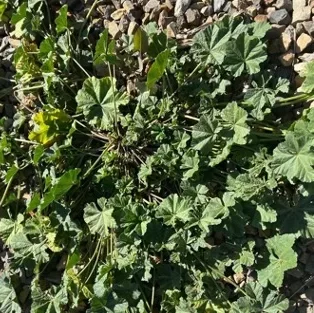
Mallow has scalloped, rounded leaves and a strong taproot that helps it survive neglect.
Hand removal is effective on young plants. Mature infestations may require selective broadleaf herbicides.
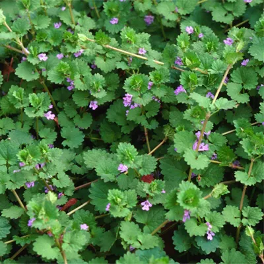
Creeping Charlie produces kidney-shaped leaves and violet-blue flowers. It travels across the ground, rooting at each node.
It can be treated with selective herbicides or physically removed before it spreads too wide.
Burr Medic produces heart-shaped leaves and burrs that attach to clothing and animals.
Selective broadleaf herbicides assist in control, along with improved turf health to prevent the weed from returning.
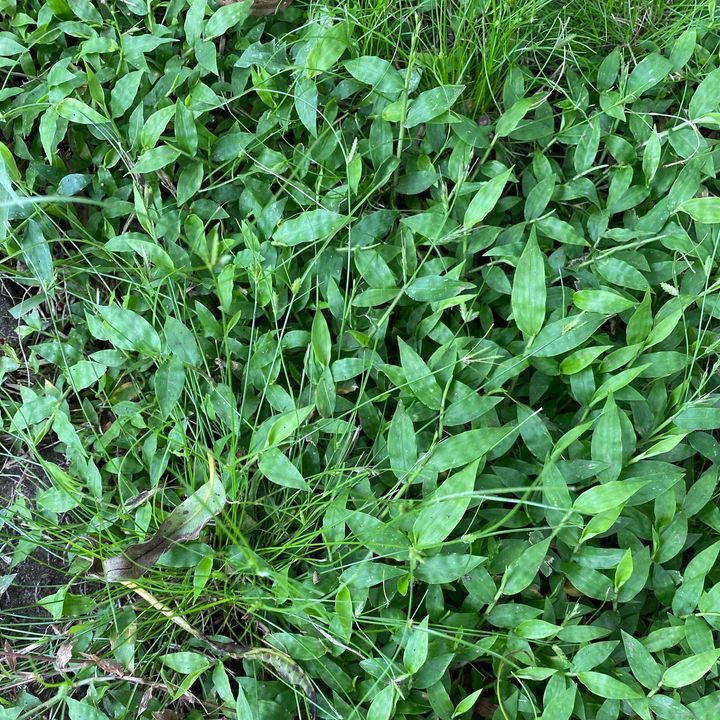
Spotted Medic is similar to Burr Medic, but with distinct dark marks on the leaves.
Broadleaf herbicides are commonly used where hand removal is impractical.
Black Medic thrives in compacted or low-fertility soil. Its leaves resemble clover, and it often signals nitrogen deficiency in lawns.
Soil improvement and selective herbicides help suppress the weed.
Fleabane grows tall with a hairy stem and narrow leaves. It often shows up in open, neglected patches.
Selective broadleaf herbicides are typically used for control. Good turf density prevents reinvasion.
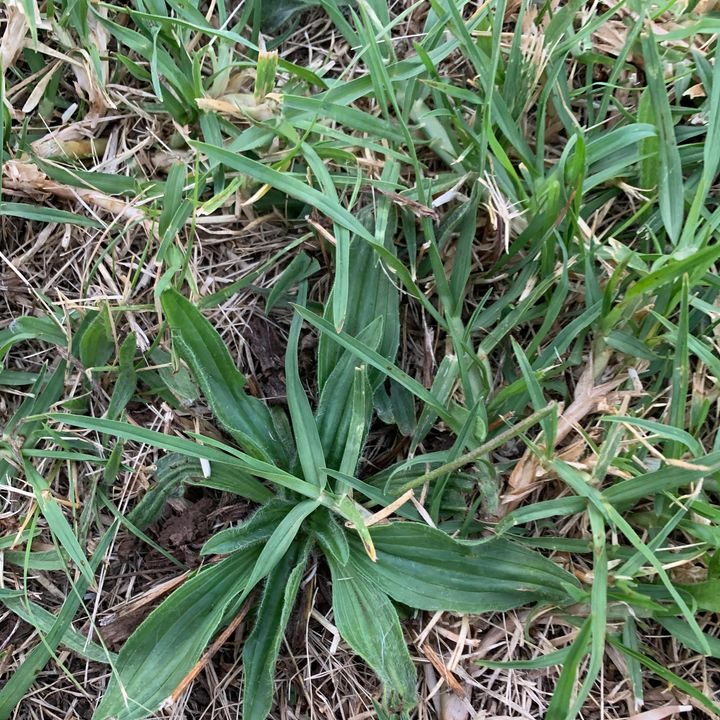
Plantain forms long vertical seed stems and broad leaves with distinct veins arranged in a rosette.
Selective broadleaf herbicides or careful hand removal can be effective.
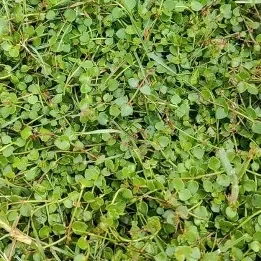
This creeping weed prefers damp, shaded areas and will root along the stems. Leaves are small, green and oval.
Hand removal is suitable for small outbreaks. Non-selective herbicides can be used with precision to avoid damaging surrounding turf.
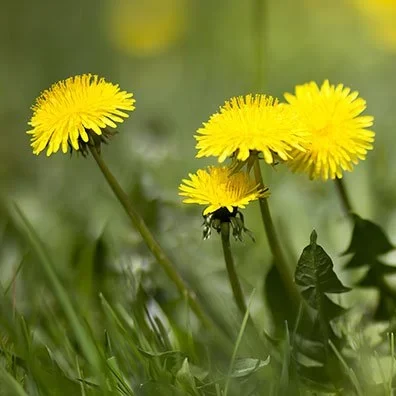
Dandelions form yellow flowers on hollow stems and have long taproots. They appear anywhere turf is thin or stressed.
Early hand removal is effective if the taproot is removed fully. Broadleaf herbicides can assist for repeat spread.
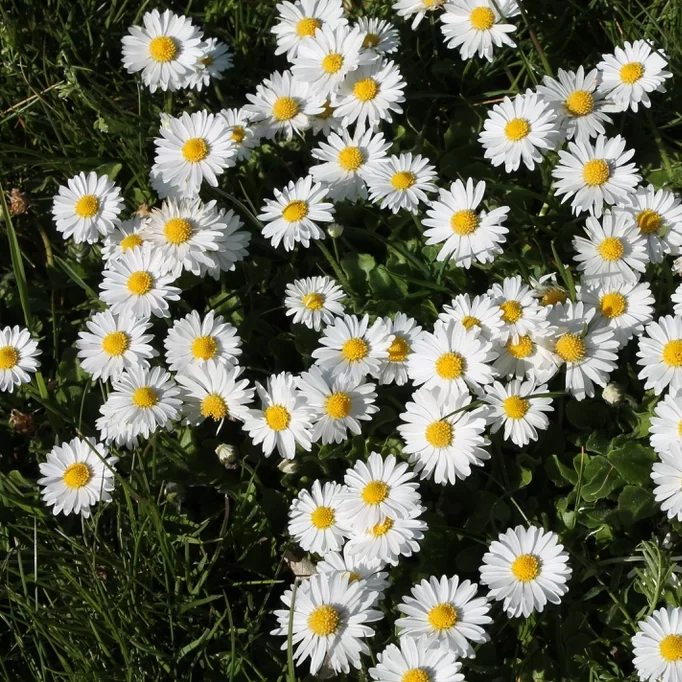
Daisies form tight rosettes of leaves and bright white flowers with yellow centres. They can cluster quickly in thinner lawns.
They respond well to broadleaf herbicide treatment and thicker turf coverage.
Purslane has succulent, teardrop-shaped leaves and reddish stems. It usually appears only where turf is extremely thin.
Hand removal is typically enough. Improving turf density is the best long-term prevention, as healthy grass out-competes purslane easily.